Showing posts with label henna. Show all posts

January 25, 2025

oVertone Espresso: Review + Goldwell Elumen (soon)

 I tried Elumen for the first time this week on my roots. I chose a color that was too light from the NN (full gray coverage) range. I was underwhelmed, but due to my color choice, I'm going to give it another go before posting a full review. Since I have switched the location of my part to the other side of my head, I have so few visible grays that I feel like I can experiment for a while.


I tried NN@7. I'm new to this. After watching videos of the other NN shades, I'm convinced they skew too warm. I'm going to try AN@5 and report back. Keep in mind, most of my hair is henna-ed, so I really need something the color of greenish-greyish-blue dirt to neutralize it.


In the interim, here's a review of oVertone in Espresso that I posted elsewhere and felt I might as well keep here as a placeholder:

For those unfamiliar with direct dyes, they essentially coat the surface of the hair/ deposit color near the surface. The more porous the hair is, the more dye is deposited, but that isn't to say direct dyes won't work on healthy or low-porosity hair. I have done a two-step henna/indigo process on my new growth for several years since I started to get gray hairs at my roots along where I part my hair (manual manipulation and heat styling means I have a row of grays in one distinct place on my head). Henna isn't a direct dye, but the dying properties (lawsone) in henna have an affinity for keratin in the hair, so henna coats the hair shaft. Indigo is a natural direct dye, and it works over henna. Orange red (henna) + blue (indigo) = brown, give or take. Henna has the benefit of making hair appear shinier and feel healthier, but the downside is it takes 4 hours, a lot rinsing, and a follow up indigo consisting of 30 minutes and more rinsing. I bought this to try and cheat between henna/indigo treatments. For those who are warm toned and don't mind dark brown hair with strong red undertones, this is a great choice. It offers full gray coverage. I have a very pale olive complexion, and my hair is naturally very dark ash brown (eyebrows are almost jet black), so this just made my hair look like some of the darkest henna stains I have had (different henna from different parts of the world stain differently, but there are no henna "colors"). I was looking for a more neutral brown, and from what I have read online, Overtone tends to skew warm, so this was a miss. Positives include short processing time, full gray coverage, and minimal to zero damage (although direct dyes are not supposed to damage hair, I have found a few of the salon brand direct dyes to be very drying). Your mileage may vary!


May 11, 2020

Henna & Gray Hair & Semi-Permanent Dyes

I'm back! We'll see. With my gray hairs becoming much more abundant (probably genes + my history of chemically straightening my hair), I have to henna much more often. I only henna my roots, but my henna-ed orange highlights are much more visible.

So, I've taken to using semi-permanent dye over my henna as opposed to indigo. Semi-permanent dye does not (in theory) damage hair; it coats hair strands i.e. wraps around the henna. While henna has an affinity for keratin and permanently remains on the hair, semi-permanent hair color eventually washes out (in theory). I embarked on this test blindly; I could not find any instances of anyone else trying this. For that reason alone, I share this with you :)

Here are my reasons for using semi-permanent dye as opposed to indigo:

- Indigo smells bad
- I hate inhaling the powder
- It is a bitch to rinse out
- It has no benefit to hair
- It costs just as much as most of the semi-permanent dyes I have tried
- There is no interaction with BAQ henna

This is an introduction to a series of posts on semi-permanent dyes I have used over henna. I will be grading based on:

- Final color
- Conditioning/damage
- Cost
- Ease of use
- Staining everything else
- Scent
- How long the effect lasts

Here is a list of products (including color boosting conditioners) that I have tried:

- Lime Crime Unicorn Hair (shades: Sea Witch, Gargoyle, Blue Smoke)
- Punky Colour (Black)
- Clairol Colorista (Midnight Blue)
- Sephora (Tenacious Teal)
- Christophe Robin Temporary Color Gel (Dark Chestnut)
- DPHue Gloss+ Deep Conditioner (shades: Black, Dark Brown)
- Cristophe Robin Shade Variation Mask (shades: Ash Brown, Baby Blonde)

I have also used a handful of anti-brass conditioners, but those aren't very useful, so I won't be reviewing them. I also won't be reviewing the last two products listed, as they are masks and not intended to do too much for color. The rest of the products listed are described as providing medium to full coverage color for a certain amount of time.

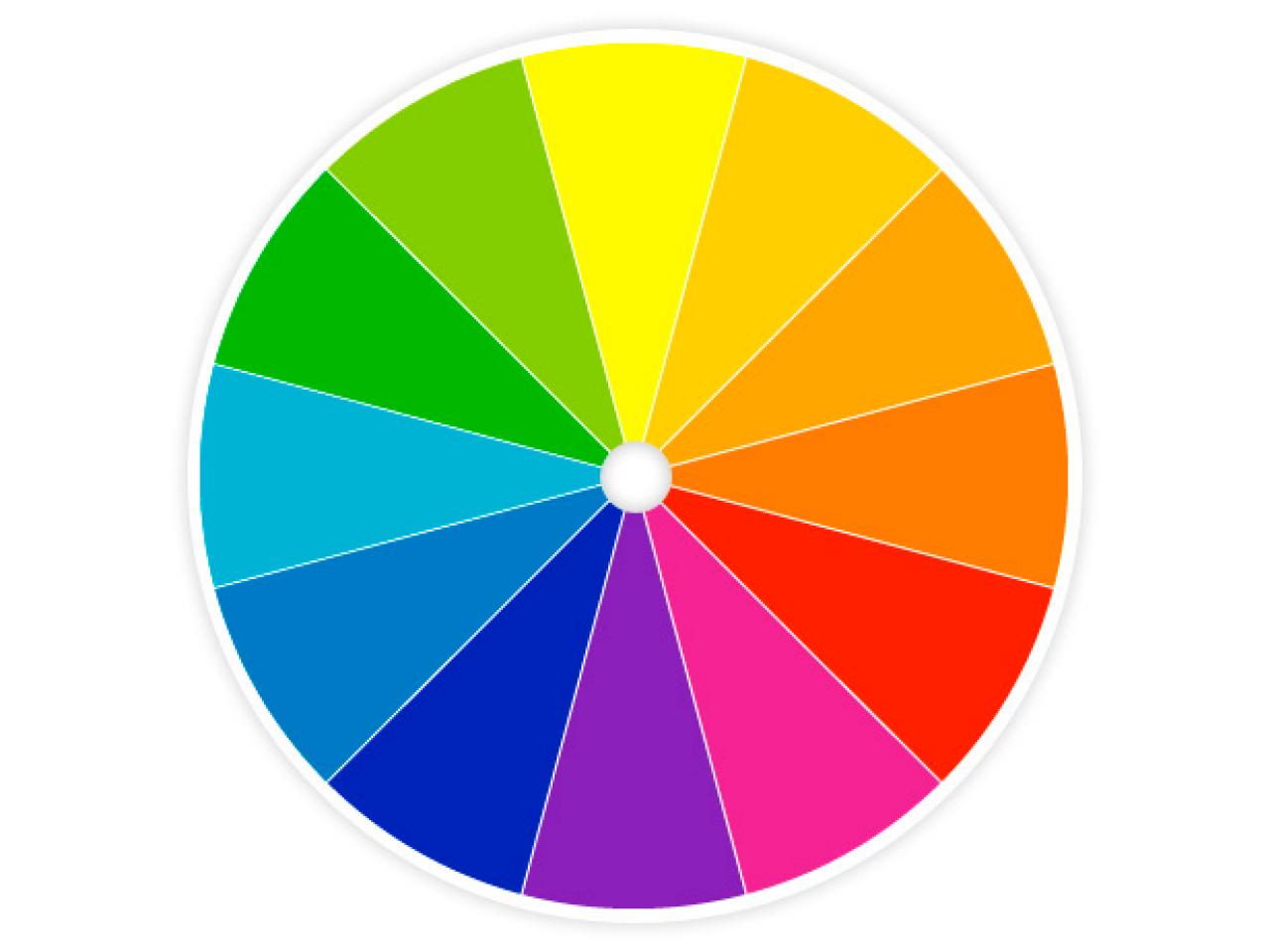
You may ask why I chose the colors I chose (other than black). Most temporary black dyes have blue undertones. We all know that red + blue = purple. If you look at the color wheel, you will find that green is directly across from red:

Color Wheel Primer | HGTV

Likewise, you will find orange directly across from aqua. So rather than adding blue to the orange/red henna, I like to add a very dark teal. My hair is naturally a very dark ash brown (my eyebrows are black - so dark black that I can't use most eyebrow products, as they all show up warm and brown on me). My goal is getting my hair closest to its natural color. Adding bright teal may mute the reddish orange henna, but it doesn't darken it much.

Okay, so without further ado, on to the reviews!

August 25, 2013

Big move! New climate! Back to back henna/BKT! pics!

I just made a permanent (ish) move. I will be attending school in Colorado for the next two years. In Chicago, summers are brutal. There is no such thing as heat without humidity in Chicago. There is no such thing as a good hair day. There are only slightly-less-than-terrible hair days.

Not anymore! Glorious, dry, Colorado heat to the rescue. My hair-life is changing. I did something bold. Crazy, even.

I did a back to back henna/BKT. Ok, maybe it's not THAT crazy.

I guess I just don't know why the thought hadn't occurred to me before. It's genius.

I did a 1/2 cup cassia, 1/3 cup henna mix. I cowashed it out. I waited for my hair to dry, then I did the BKT.

For photos and a bunch of me babbling, read on!

July 30, 2013

some more recent shots.

I took some pictures of my curls tonight. I did a henna/cassia mix this morning. I used 50g of cassia and 25g of henna, mixed with lemon juice and chamomile tea. When it was time for application, I added in 1/4 cup of honey and 1/8cup coconut oil.

After rinsing/co-washing, I applied the Marc Anthony Easy-Lites to air dried (top 3/4 of my hair) and blow dried. I applied BKT solution to the 1 inch new growth and blow dried/flat ironed it (yes, I can just blow dry and flat iron 1 inch). I applied KCCC to the lengths of my hair. I applied Living Proof mousse to the majority of my hair, and applied Living Proof Amp to select individual strands for definition. Seven hours later: not too bad, given our strange cold weather and high humidity.

here are photos of my hair after a days work, in the florescent lighting:

Read on for more photos!

July 23, 2013

Lightening henna'ed hair Part II


I lightened my henna'ed hair and lived to tell.

I had to take a head on shot for my graduate school ID:

July 22, 2013

My henna ritual

I used to do a pretty standard henna preparation, but now I do a henna/cassia mix to avoid my hair from getting too dark.

- I use 1/2 cup cassia (bought from HennaSooq) and 1/3 cup BAQ Henna (Dulhan or Jamila).

- I use about a cup (or 8 oz) of hot/warm chamomile tea. I use chamomile due to its natural staining ability. If you are not concerned with toning down redness, you can use any tea.

- I also use the juice of 1/4 a lemon, if I have it on hand. This is another hair lightening modification, although if you add in lemon juice to any henna mix, the dye will release faster, due to the high acidic content.

1. I combine the henna, tea, and lemon juice in a bowl.
2. I whisk until my mixture resembles cake batter.
3. I seal the container. I have been using Glad Press n' Seal, but saran wrap works the same way.
4. I wait 12 hours.
5. I add in some coconut oil and honey. Henna can be drying on its own, and lemon juice can be especially drying. I also oil my ends with coconut oil before applying the henna. From my experience, so long as these things are added after the dye has released, they pose no threat. Honey is a natural humectant, so odds are it will only benefit your henna experience.
6. I apply the henna to my entire head, making sure to fully saturate the roots.
7. I leave the henna in my hair for at least 1 1/2 hours but always less than 4 hours.
8. I rinse/co-wash with a silicone free conditioner as many times as needed. Afterwards, I condition my hair normally.

I have previously experimented with other acids in the past. My first few henna treatments were done with coconut milk as the acid. I know other women have had success with it, but I never got the great result that I have gotten using teas. My experience with warm water was the same.

With regards to Amla, I don't use it. It is supposed to aid in curl retention and give a darker brown cast to the henna, neither of which I want.

Footnote: Henna is messy. Make sure you have plastic gloves and saran wrap. I also keep baby wipes at hand to easily remove henna when it touches areas that are hard to get to or hard to remove.

I hope this is helpful!


July 21, 2013

Lightening Henna'ed hair, Part I

Part I:


I have lightened my henna'ed hair and lived to tell.

Here is a photo of my hair color, post BKT, before my first henna
My hair was straight (post BKT during that 3 day waiting period) in the above photo. I am starting to realize that I only photograph myself when my hair is straight. That needs to stop.

Here is a more recent photo:
So this photo was taken two months ago, and the one above was taken a year ago in June. You can see the ends of my hair are basically black, with a red tint.

Honey Lightening

I found out about honey lightening on the LHCF. Basically, honey has naturally occuring peroxide, and when mixed with other peroxide boosters (cinnamon, cardamom, coconut oil, olive oil) it can have a lightening effect on hair (over the course of multiple treatments). 

I can not speak to whether honey lightening works. My skin and scalp are sensitive to cinnamon. I found out the hard way. Fiery red lines down my face that looked like chemical burns. They subsided in an hour, but I knew that I was going to need to take another approach.


To be continued............... (part two will cover some popular at home hair lighteners)


Henna

Here are some popular online Henna resources:

The Henna Page
Mehandi.com
Henna for Hair
Henna Sooq

What is henna? 

Henna is a plant (lawsonia inermis). The plant is finely ground into a powder, and when mixed with an acid, after for allowing for the appropriate amount of time, the dye molecules release. It stains skin temporarily and stains hair permanently. Lawsone, the dye molecule, has an affinity for protein in skin and hair.

Why use henna? 

There are many reasons why people use henna on their hair. Henna is a very effective dye, and people looking for a beautiful shade of red can achieve it with henna, so long as their hair is light enough in color (Lucille Ball was known to bleach her hair and then henna over it to achieve her famous red shade). Henna can effectively cover gray hair. If you have just a few grays, here and there, henna can turn them into beautiful highlights. I think it is especially pretty on people with naturally dark hair and a few grays. Henna can have "conditioning" type effects. I use quotations because some scientists argue that henna is not a "conditioner" in technical terms.

Here are the "conditioning" effects henna has on my hair:

henna binds to the keratin in hair, essentially coating the hair and adding bulk - my hair is naturally very thin - henna makes my hair appear thicker.
henna loosens my curl pattern - due to the same reason as above - more weight on the hair shaft produces an elongated curl.
henna makes my hair shiny, and it always feels smoother after a treatment. I think this is because the shaft is coated, cracks are filled in, and also because the curl, after being elongated and less kinky, reflects light better (not 100% on this one!)

What if I don't want red hair? 

Some will argue with me, but I think in order to get the full benefits of henna, you are going to have to be willing to put up with a bit of a red tint. No, you don't need to become a redhead. Indigo (a dark blue dye, also a plant) and Cassia (another plant that has a slightly staining yellow effect) can be mixed with henna to create a desired haircolor. Usually, people will henna before indigo or add an indigo mix to henna after the dye has released. It is not usually recommended to indigo first, as indigo has no conditioning benefits for hair. Cassia can be prepared with henna.

What henna should I buy? 

Always buy body art quality (BAQ) henna for use on hair. Do not buy "henna hair dyes" as they usually contain metallic salts and are not pure henna. Henna only comes in one shade: red. If you see "black henna" or "blond henna" it is not henna. It could be a indigo/henna or a cassia/henna mix, but there is no way to be sure. Don't buy it.

Where can I get BAQ Henna? 

I live near an area of town affectionately called "little India". It has the largest South Asian concentrated population in the United States. I buy my henna there. Chicagoans will know it as Devon Avenue. It is relatively easy to get BAQ (body art quality henna). Even if you don't find it in the first store, just go two stores down. My most recent purchase was a HUGE bag of Dulhan BAQ henna (1000g) for $10. I have also ordered from Henna Sooq in the past, when I was out of town or out of the country. They usually have specials on Friday, and I purchased a bunch of Cassia recently as I have been lightening my hair. Any of the links at the top of the page will have info on getting BAQ henna. I think that if you are a henna newb, online is probably your best bet. I actually purchased some non BAQ Jamila in store that was masquerading as BAQ. I could tell that it was not BAQ during the prep process, so I threw it away, but someone unfamiliar might not know what to look for.

BAQ henna will usually be:

- light green in color
- packaged in a sealed foil pouch or plastic bag
- come in a box with the sealed bag inside
- have an expiration date
- not say anything about hair dye on the box. the Jamila and Dulhan that I usually get in the store say nothing on them except "henna powder"